Our climate is a powerful collaboration between the sun, our atmosphere, and the oceans. While solar activity provides the energy that drives our weather and waves, the delicate balance of Earth’s natural systems regulates our 'global thermostat.' Human activity has been altering Earth’s balance and pushing its temperature setting to unsafe levels.
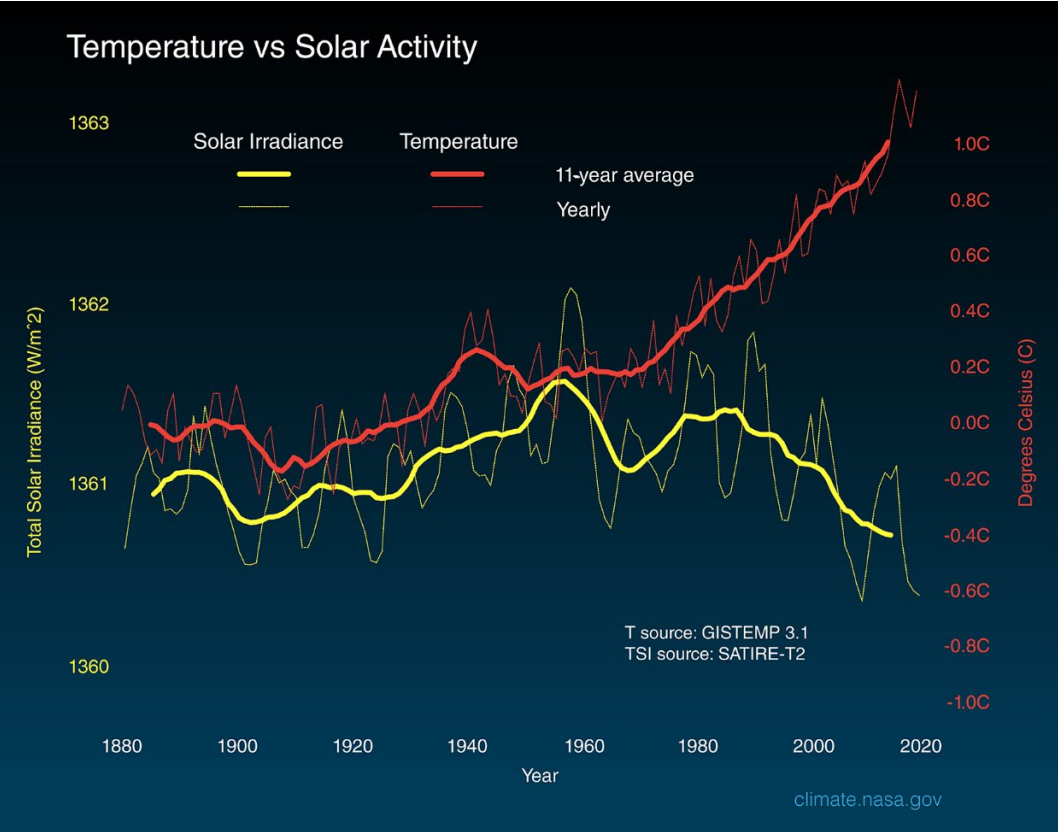
[IMAGE: Temperature vs. Solar Activity (NASA). Caption: Data proves it: while solar activity has declined, temperatures have spiked. Human-produced greenhouse gases are the undeniable driver [8].]
When we burn fuels, we release CO2 (and other greenhouse gases) that trap heat, the "Greenhouse Effect" [7], that would otherwise escape into space. 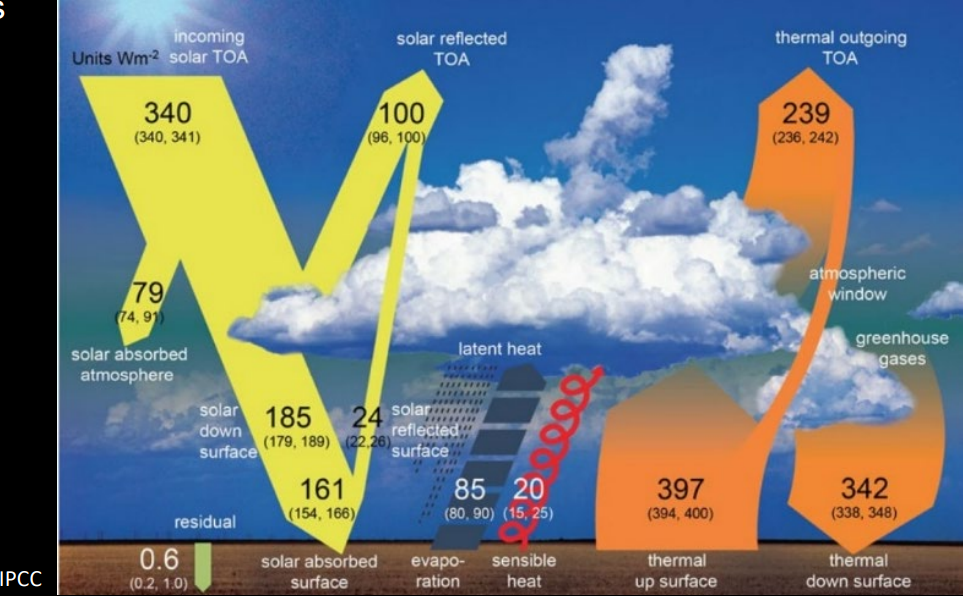
[Image: The Greenhouse EffectCaption: Our planet’s energy budget is currently in the red. We are trapping more thermal energy than we are releasing, and the ocean is the primary sponge for that excess heat.]
Empirical data demonstrates that trends in human emissions are driving Earth’s temperature. Protecting our coastlines starts with understanding our limits. Scientists have calculated exactly how much more carbon we can emit before hitting the dangerous threshold of 1.5°C of warming. This is our "Carbon Budget."
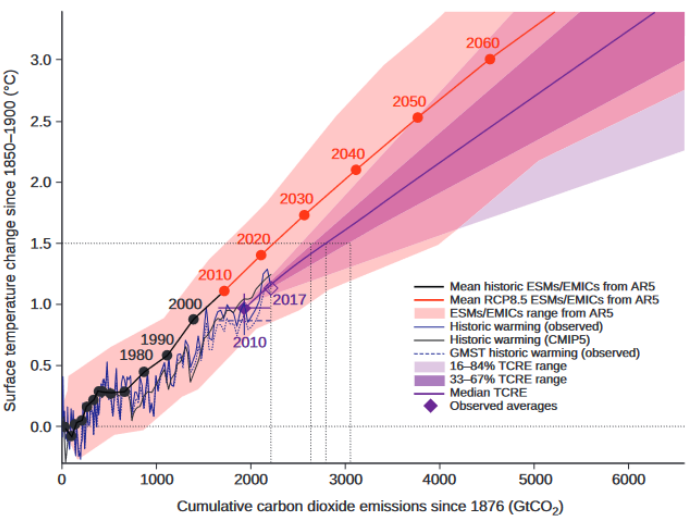
[Image: Cumulative CO2 Emissions vs. Temperature Change. Caption: This chart shows the direct, linear connection between the carbon we've emitted since the late 1800s and the steady rise in global temperatures. The dotted lines represent our narrow window of opportunity to prevent the worst impacts of sea-level rise on the Central Coast. These temperature estimates are often conservative. They don't yet account for "feedback loops," such as methane release from melting permafrost. Every ton of carbon we keep in the ground counts toward a more resilient future for our beaches (Source: IPCC, 2022).]
