Climate change isn't just a future prediction; it’s a present reality. Across the country, we are seeing a spike in the frequency and intensity of extreme weather events that carry a heavy human and economic price.
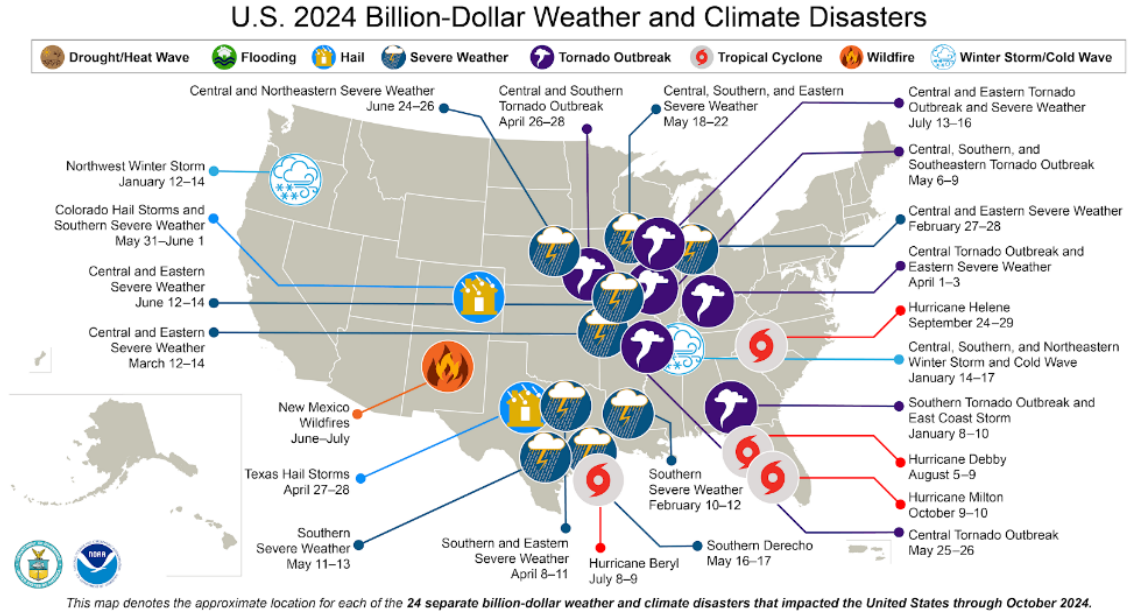
[Image: U.S. 2024 Billion-Dollar Weather and Climate Disasters. Caption: 2024 has seen a record-breaking number of billion-dollar disasters across the U.S. From atmospheric rivers in California to hurricanes in the Gulf, the scale of impact is rising alongside global temperatures.]
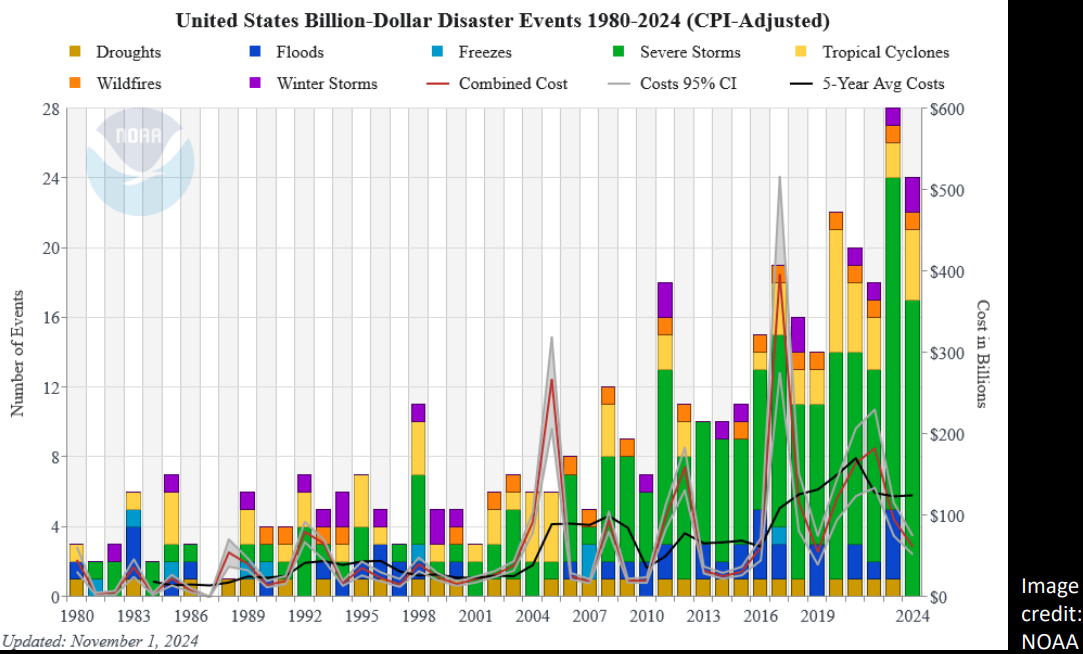
[Image: United States Billion-Dollar Disaster Events 1980–2024. Caption: This data tracks the dramatic increase in billion-dollar weather events over the last four decades. The catastrophe induced by these events cost billions of dollars and are on the rise. For Surfrider SLO, this underscores the urgent need to build coastal resilience and transition to clean energy.
Climate change impacts more than weather, it impacts all of the ecological systems that contribute to the beautiful nature of our planet.]
Our local marine life, from the kelp forests to the tide pools, is highly sensitive to even minor changes in temperature and chemistry.
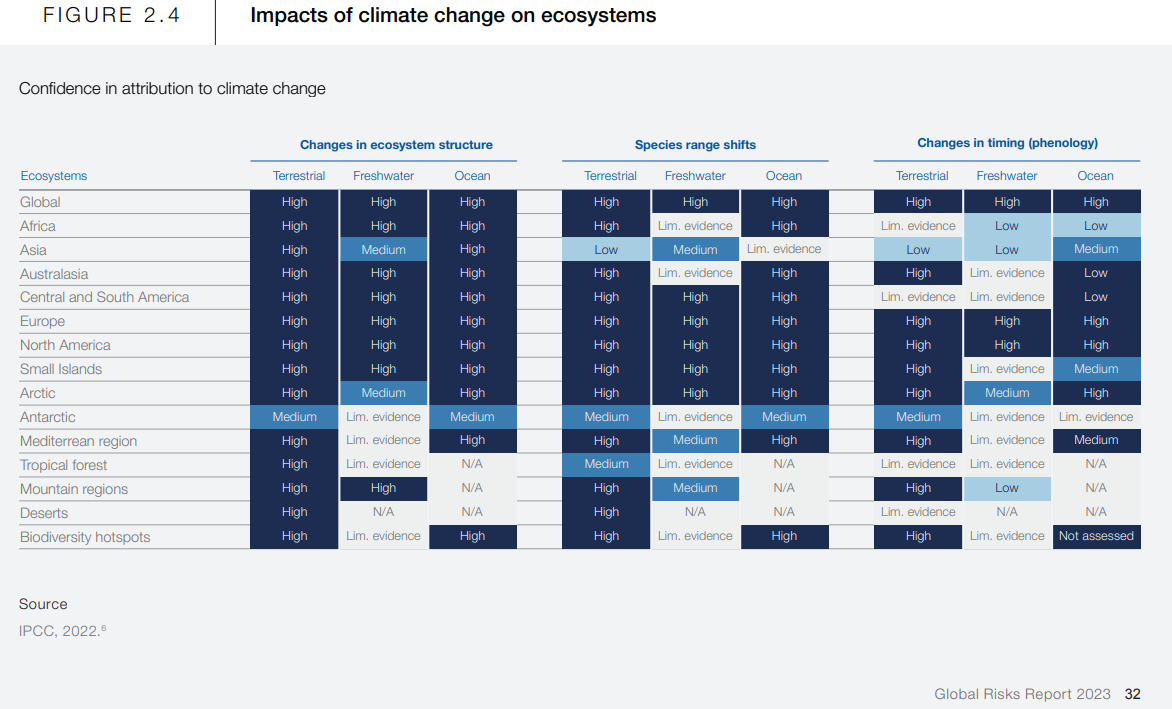
[Image: Impacts of climate change on ecosystems (Table). Caption: Scientific evidence shows high confidence that climate change is altering ecosystem structures and species ranges globally. Our local Central Coast species are already on the move as waters warm.]
The state of ecology is connected to far beyond our natural world. It is the life force that drives prosperity.
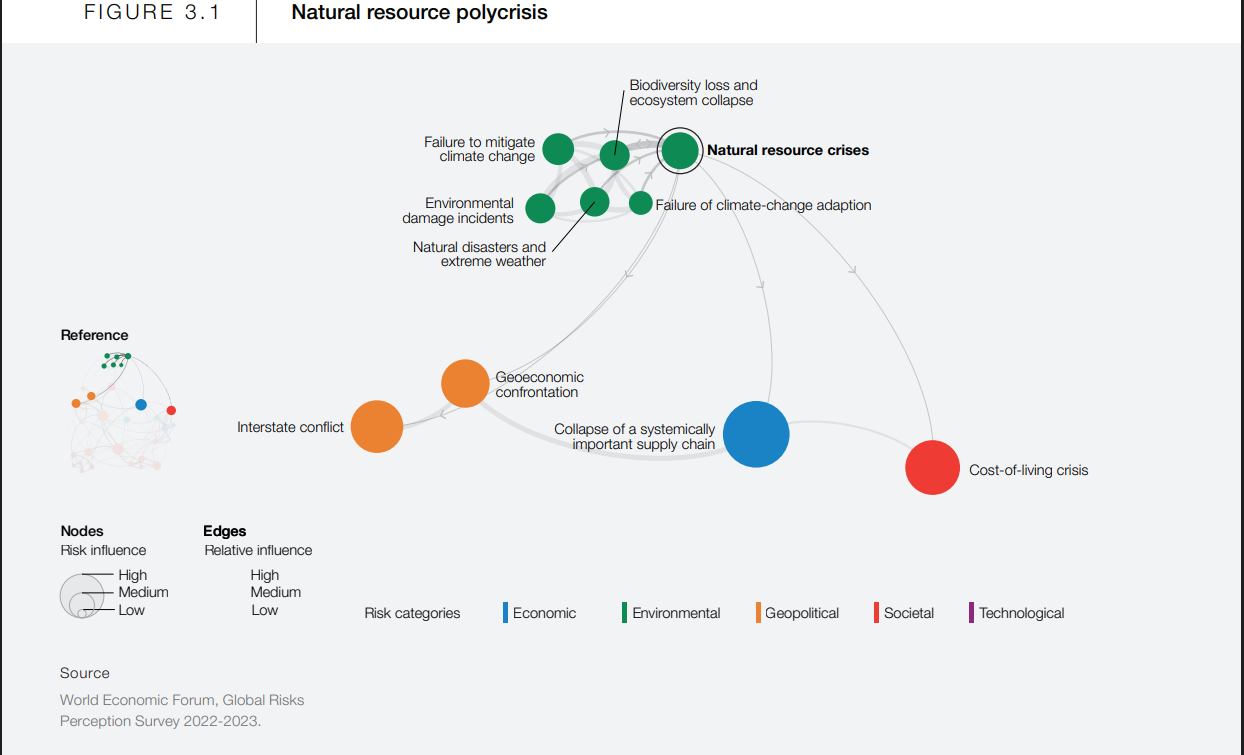
[Image: Natural resource polycrisis (Diagram). Caption: Environmental damage doesn't happen in a vacuum. A "polycrisis" occurs when climate failure triggers resource scarcity, economic instability, and a rising cost of living. Protecting our ocean is the first step in stabilizing our shared future.]
