Our reliance on the "Old Guard" of energy has created a carbon debt the Earth can no longer carry. Fossil fuels account for 80% of our primary energy [6]. Whether it is the geopolitical volatility of oil or the carbon intensity of coal, the status quo is no longer viable.
Oil
●In 2020, the world consumed 90 million barrels of oil every single day. While demand in developed nations has generally trended downward, the global landscape is shifting, with emerging economies projected to account for 80% of oil use by 2050.
●This reliance puts us in a precarious position. Most of the world’s oil is controlled by just a few organizations, like OPEC, which holds 70.2% of global reserves. History shows how easily this concentration of power can lead to crisis, like in 1973, when an oil embargo caused prices to quadruple almost overnight, leaving a lasting impact on the global economy.
●Most importantly for our future, we are running out of time: at current production rates, global oil reserves are estimated to last only about 50 more years. For the sake of our oceans and our communities, the transition to stable, renewable energy has never been more urgent.
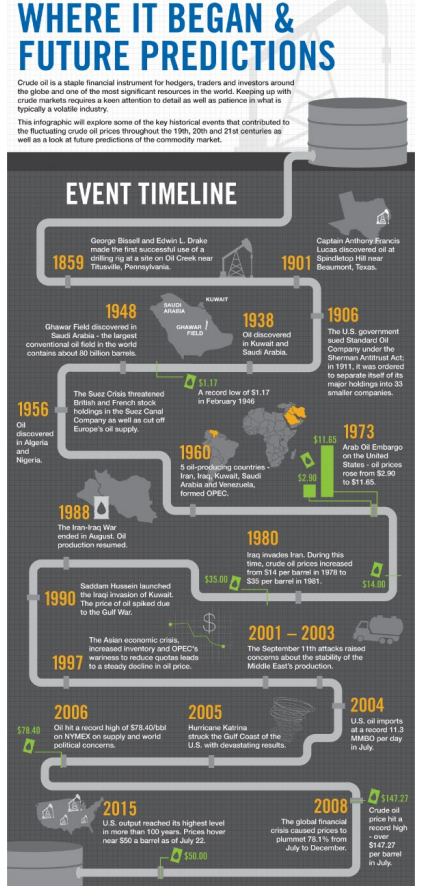
[IMAGE: Crude Oil Event Timeline. Caption: Our history of oil reliance has been defined by instability. The next chapter must be different.]
Methane (“Natural Gas”)
●In 2020, global demand for natural gas reached a staggering 3,800 billion cubic meters, driven largely by industrial growth in emerging economies. While gas is often used to replace dirtier fuels like coal in heavy industries like steel and cement, it remains a finite fossil fuel with its own environmental costs.
●Currently, natural gas is even being used to create 'blue' hydrogen as a temporary step toward 'green' hydrogen powered by wind and solar.
●The clock is ticking: global reserves are estimated to last less than 49 years at our current pace. At Surfrider, we advocate for skipping the 'bridge' and moving straight to the renewable solutions that will keep our coastlines safe for generations to come.
Coal
●The story of coal is one of two different directions. In many places, we are seeing a positive shift: between 2000 and 2022, coal consumption dropped significantly in the USA, Germany, and the UK. However, during that same period, use has skyrocketed in China and India to meet rapid industrial growth.
●While coal is often moved by sea, impacting our global shipping lanes and ports, the recent energy crisis sparked by the war in Ukraine has unfortunately pushed many nations back toward burning 'cheap' coal.
●Unlike oil and gas, coal isn't running out soon; there are roughly 155 years of reserves still in the ground. For those of us at Surfrider, this underscores that the transition away from coal isn't about running out of fuel, it’s about making the conscious choice to leave it in the ground to protect our climate and our oceans.
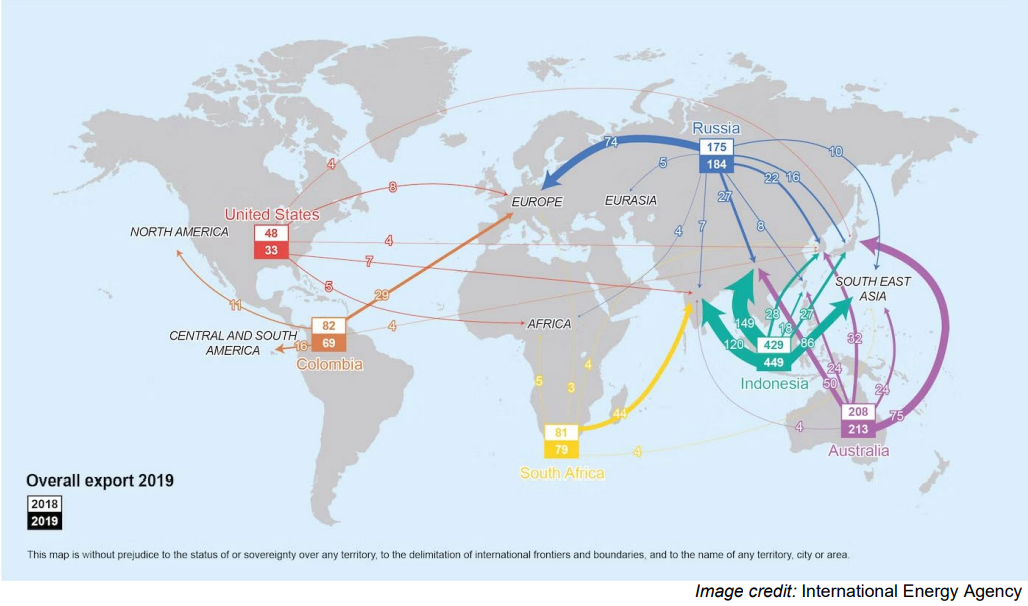
[Image: Global Coal Export Map. Caption: Coal is often moved by sea, impacting our global shipping lanes and ports. Our mission isn't about waiting for the coal to run out; it’s about making the conscious choice to leave it in the ground to protect our atmosphere.]
Uranium
●Nuclear energy presents a complex challenge for the Central Coast, particularly with our proximity to Diablo Canyon. It offers a low-carbon alternative but requires intense management of resources and long-term environmental stewardship.
●When it comes to nuclear energy, the question often comes down to sustainability and supply. Based on current data, we have enough economically viable uranium to power our existing global fleet for another 135 years. As we advocate for a healthy ocean and a stable climate, understanding these long-term resource timelines helps us plan for a truly resilient energy future.
