To understand why our coast is changing, we have to look at how we power our lives. Energy is the "work" behind everything we do, but the current global system is built on a fundamental imbalance.
●Our collective energy footprint is shaped by three key factors: the efficiency of the machines and appliances we use, the design of our buildings and transportation systems, and our own daily habits and consumption choices.
●Using an array of mechanical and electrical systems, primary energy (from renewables to fossil fuels) is harnessed and converted into useful work and heat.
●As we look at the future of our planet, the scale of our energy use is a critical part of the conversation. In 2021, global energy demand reached approximately 595 EJ, and without significant changes to our infrastructure, that number is projected to climb to 712 EJ by 2040.
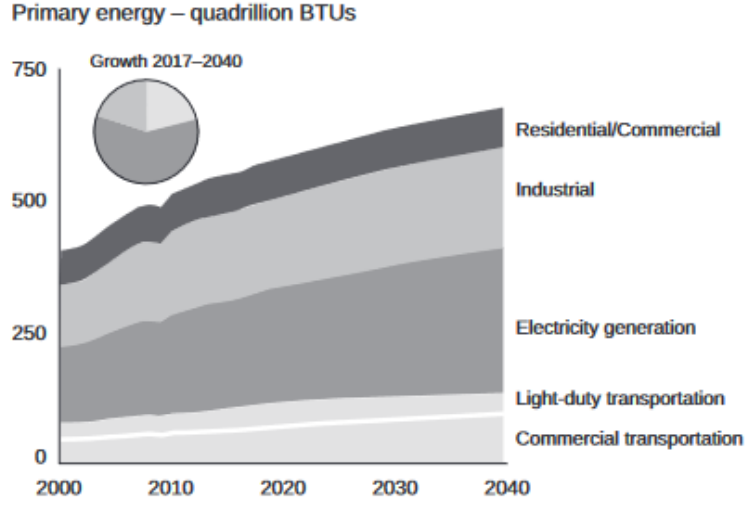
[Image: Primary Energy Growth by Sector. Caption: Global energy demand is projected to climb significantly by 2040. Without a shift in our infrastructure, this increased "work" translates directly into higher risks for our coastal ecosystems.]
●For those of us dedicated to coastal protection, these figures underscore the urgent need to transition toward a more sustainable, efficient energy future to keep our oceans healthy and resilient. While fossil fuel energy production will increase, clean energy percent energy production is on the rise
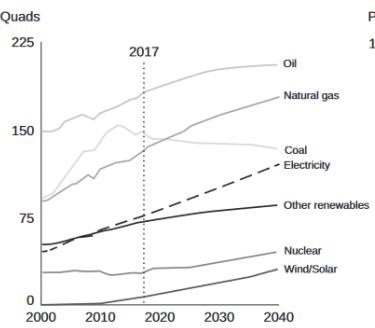
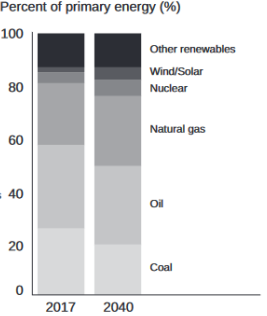
[Image: Primary Energy by Fuel Source. Caption: While clean energy is finally on the rise, we are still locked into a legacy of oil and gas. Surfrider SLO works to accelerate the "electricity" line while phasing out the fossil fuels that threaten our shores.]
The Disparity:
●Electricity generation will be the largest and fastest growing sector, primarily reflecting expanding access to reliable electricity in developing countries.
●While the United States makes up only about 4% of the world’s population, we consume roughly 20% of its primary energy [3].
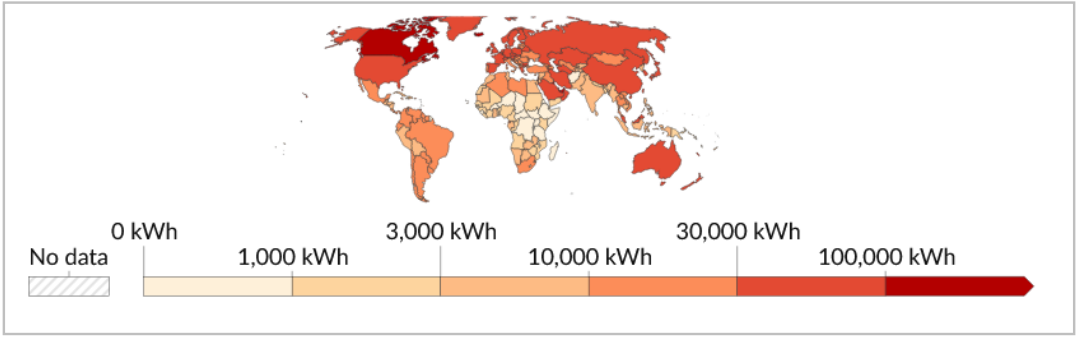
[Image: Global Energy Consumption Mapy. Caption: Energy use is not shared equally. While the United States makes up only 4% of the world’s population, we consume roughly 20% of its primary energy. This disparity places a unique responsibility on communities like San Luis Obispo to lead by example.]
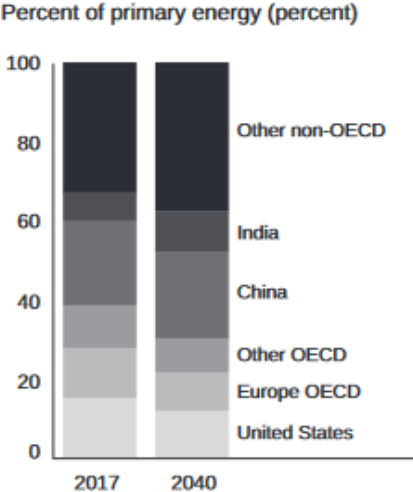
[Image: Regional Energy Demand. Caption: As developing nations expand access to reliable electricity, the global demand for power will shift. Our role in the "Global North" is to innovate and export clean technology, ensuring the world’s growth doesn't cost us our climate.]
●The Economic Link: Historically, societal prosperity has been tied to carbon. As countries lift people out of poverty, energy needs skyrocket. Breaking this link, decoupling prosperity from pollution, is a defining challenge of our generation [4].
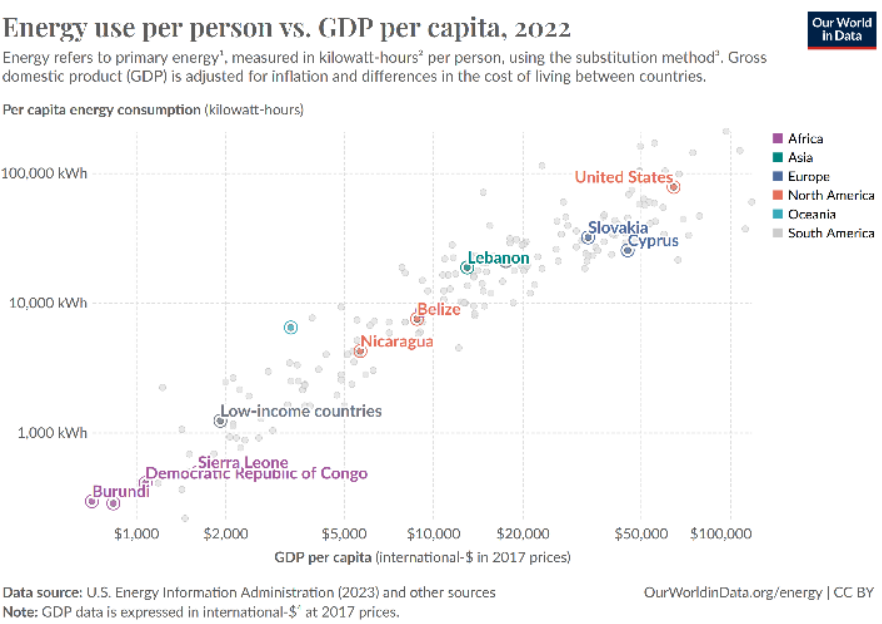
[IMAGE: Energy use per person vs. GDP per capita, 2022. Caption: High-income communities like ours have the greatest responsibility to lead the transition to clean energy.]
●Ensuring a sustainable future means more than just swapping fuel sources, it's about equity. Today, over 675 million people, primarily across India and Africa, still lack basic access to electricity and clean cooking tools. At Surfrider, we believe the shift to low-carbon energy must be a just transition, one that uplifts communities and works directly to eradicate poverty while protecting our natural world.
●For 200 years, energy has been concentrated in fossil fuel pockets, leading to wealth inequality and conflict. The transition to renewables is a democratization of power: moving toward dispersed, infinite, and local energy sources [5].
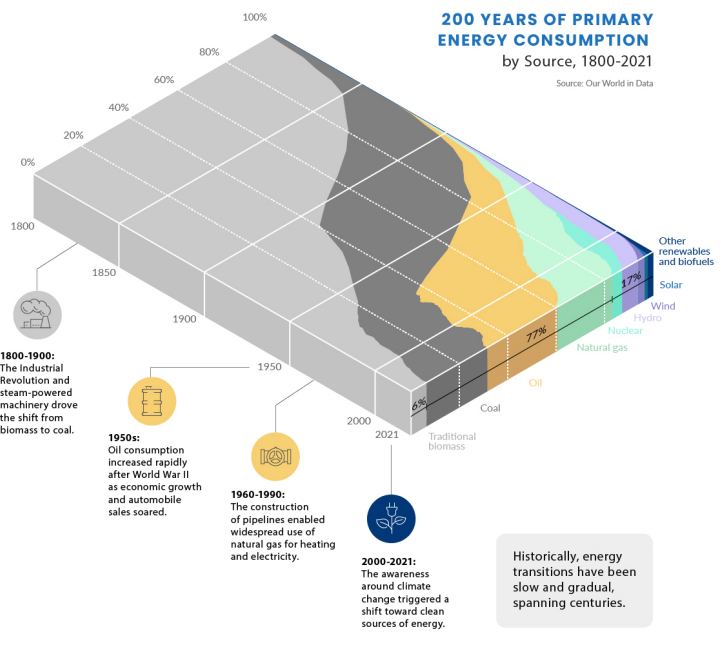
[IMAGE: 200 Years of Primary Energy Consumption by Source. Caption: We are ending the era of extraction and beginning the era of generation.]
●Ensuring a sustainable future means more than just swapping fuel sources, it's about equity. Today, over 675 million people, primarily across India and Africa, still lack basic access to electricity and clean cooking tools. At Surfrider, we believe the shift to low-carbon energy must be a just transition, one that uplifts communities and works directly to eradicate poverty while protecting our natural world.
●Energy has always been a powerful force in shaping our world’s history and its conflicts. For over a century, the high energy density of fossil fuels (and the fact that they are only found in a few specific places) has concentrated political power in the hands of a few. By moving toward decentralized, renewable energy, we can help shift away from this history of resource-driven conflict and build a more secure, equitable future for our coastal communities and beyond.
