Beyond technology, we have a natural ally: Blue Carbon. This refers to the carbon captured and stored by coastal ecosystems like kelp forests, seagrasses, and salt marshes [13].
●Sequestration: These habitats can store up to 10 times more carbon per acre than land-based forests [14].
●Protection: By protecting our local kelp beds, we are building a natural carbon sink right off our shores.
The ocean has been our silent hero, absorbing over 90% of the excess heat and 25% of the carbon dioxide produced by human activity. The ocean has buffered us from the worst impacts of climate change, but that buffer has reached its limit. We are now witnessing a "Triple Threat" that endangers the Central Coast:
●Sea Level Rise: The Central Coast is projected to see at least one vertical foot of rise by 2035-2050, which could lead to significant beach loss and threaten our iconic surf breaks [9].
●Acidification: As the ocean absorbs CO2, its pH drops. This "ocean acidification" makes it harder for shell-building organisms like plankton and shellfish to survive [10].
●Deoxygenation: Warmer water holds less oxygen, leading to "dead zones" where marine life struggles to breathe [11].
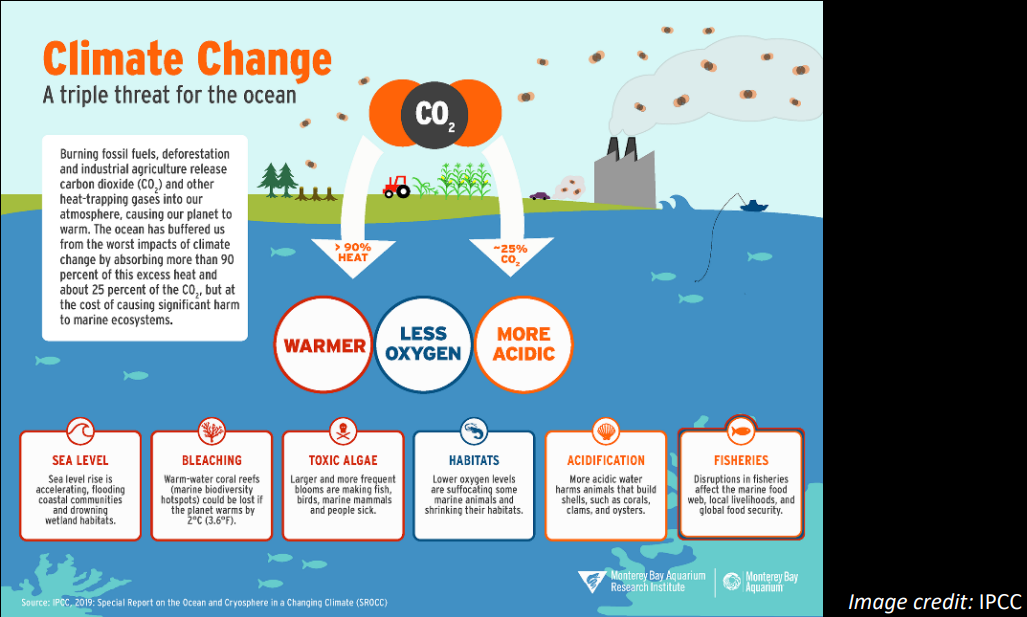
[IMAGE: Climate Change: A Triple Threat for the Ocean Infographic. Caption: The ocean absorbs 90% of excess heat and 25% of human CO2 emissions, but the chemical cost is devastating.]
